
FACEDANCING ALBERTA
The Politics of Performance Under Danielle Smith and the United Conservative Party

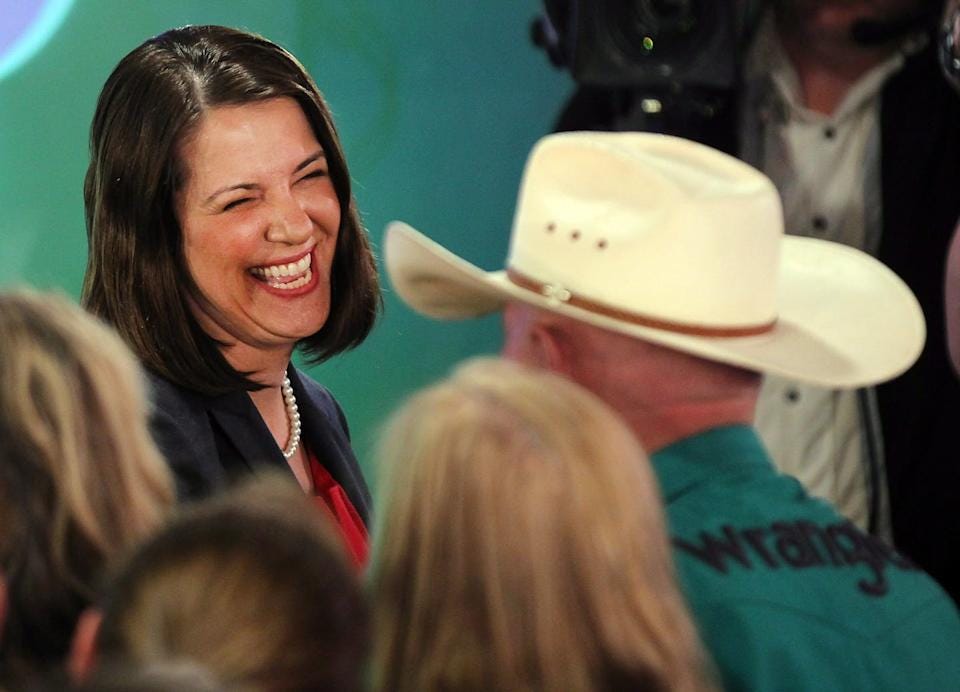
The concept of “facedancing” describes a political condition in which performance becomes more important than substance, where emotional presentation is carefully engineered to shape public perception independently of the underlying reality. Borrowed conceptually from Dune Messiah and its shape-shifting “Face Dancers,” the term applies uncannily well to modern populist politics, particularly in Alberta under Premier Danielle Smith. In this context, facedancing is not simply spin or ordinary political messaging. It is the strategic use of multiple public “faces” tailored to different audiences, each crafted to preserve support while masking deeper contradictions within governance itself.
Under Smith’s UCP, politics increasingly operates as a system of emotional calibration. One audience receives reassurance, moderation, and “common-sense” language. Another receives ideological confrontation, anti-federal rhetoric, and promises of institutional disruption. The remarkable feature is that both messages can emerge from the same government within the same week, sometimes within the same speech cycle. This is not accidental inconsistency. It is the deliberate management of parallel political realities.
The Moderate Face and the Rebel Face
The Smith government frequently presents itself to urban and economically cautious Albertans as pragmatic, stable, and managerial. During mainstream interviews or business-focused appearances, the language softens considerably. The tone becomes calm and conversational. Policies are framed as practical adjustments, regulatory modernization, or efforts to defend affordability and provincial interests. This is the moderate face: approachable, measured, and designed to reassure markets, suburban voters, and institutional actors that Alberta remains governable.
Yet simultaneously, another face is projected toward the activist base that helped propel Smith to power. In those spaces, the rhetoric hardens. Ottawa becomes an existential threat. Courts, federal agencies, environmental regulations, and public institutions are portrayed as hostile forces constraining Alberta’s freedom and identity. The language shifts from managerial governance to cultural struggle. Suddenly the government is no longer merely administering a province; it is leading a resistance movement.
The genius of facedancing lies in allowing both realities to coexist without immediate collapse. Urban moderates hear “stability.” The ideological base hears “rebellion.” Each audience receives a customized emotional experience while the underlying machinery of power continues uninterrupted beneath both narratives.
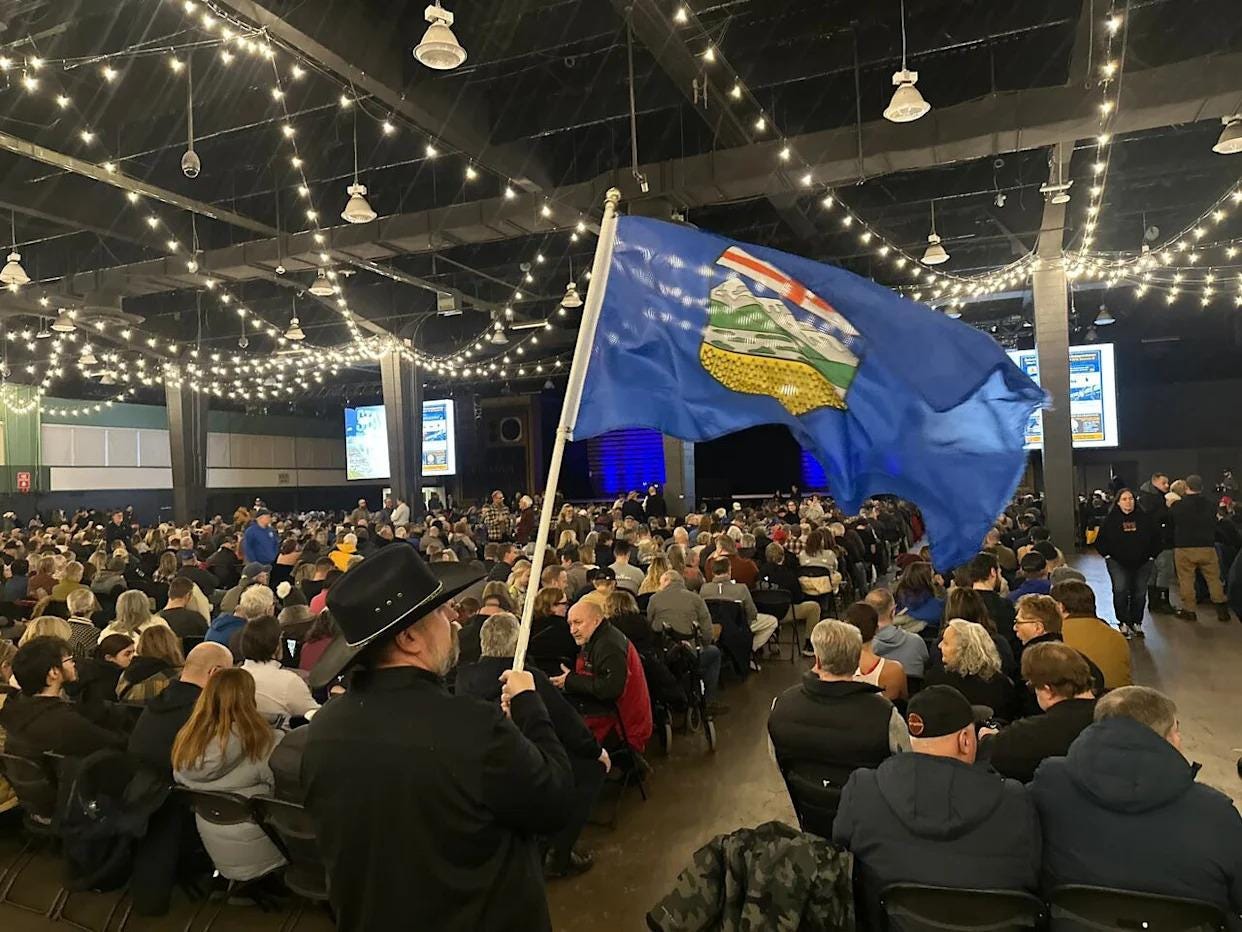
Governance Through Emotional Translation
Perhaps the clearest example of facedancing is the translation of controversial structural policies into emotionally soothing language. Measures that centralize authority or reduce institutional independence are rarely presented in blunt terms. Instead, they are wrapped in concepts like “choice,” “freedom,” “efficiency,” “red tape reduction,” or “standing up for Alberta.”
This is political emotional engineering. The public is encouraged to react not to the actual mechanics of policy but to the emotional framing attached to it. A restructuring of healthcare governance becomes “improving patient outcomes.” Expanded ministerial discretion becomes “cutting bureaucracy.” Democratic concerns become “fighting elites.” The face shown to the public is one of empowerment and practicality even when critics see concentration of authority or institutional weakening underneath.
The result is a strange inversion of democratic accountability. Citizens are no longer evaluating policies primarily through outcomes or constitutional implications. Instead, they are increasingly reacting to emotional branding. Politics becomes less about “What does this do?” and more about “How does this make me feel about who I am?”
The Social Media Amplifier
Modern facedancing would not function nearly as effectively without digital media ecosystems. Social platforms reward emotional immediacy, simplified identity narratives, and conflict-driven engagement. In that environment, performance becomes more politically valuable than consistency.
A carefully edited video clip of a politician “fighting for Alberta” can circulate far more powerfully than a nuanced policy explanation. Outrage spreads faster than detail. Symbolic gestures outperform legislative analysis. The algorithm itself becomes an accomplice to facedancing because it rewards emotional resonance over institutional literacy.
This has created a political environment where many citizens experience governance primarily through fragments of identity performance rather than through direct engagement with legislation, budgets, or procedural changes. The emotional “face” becomes the reality most people consume.
In Alberta, this dynamic intersects with a long-standing culture of regional grievance and economic anxiety. The result is fertile ground for political identity construction. The UCP does not merely govern Alberta; it increasingly narrates Alberta as a besieged civilization under constant attack. Facedancing allows that narrative to be intensified or softened depending on the audience being addressed.

The Long-Term Risk
The problem with facedancing is that it works best in the short and medium term. Over time, lived experience begins colliding with curated emotional imagery. If healthcare access worsens, affordability remains strained, democratic trust erodes, or institutional instability grows, eventually the emotional performance becomes harder to sustain. Citizens begin comparing the face presented to them with the conditions they actually inhabit.
At that point, adaptability starts to look like contradiction. Contradiction starts to look like manipulation. And manipulation eventually corrodes trust not only in one government but in democratic systems themselves.
This is the deeper danger of facedancing. It trains the public to see politics not as a process of collective problem-solving but as a theatre of emotional allegiance. Loyalty becomes detached from outcomes. Identity overtakes governance. The spectacle becomes the substance.
Under Danielle Smith’s UCP, facedancing has evolved into more than a communications strategy. It has become a governing architecture built on layered realities, emotional segmentation, and perpetual narrative management. The central political question facing Alberta may therefore not simply be whether people agree or disagree with the government’s policies. It may be whether citizens can still distinguish between the face being shown to them and the machinery operating behind it.
The carefully done hair and makeup invariably makes me think of the movie version of 'The Hunger Games'.
As Margaret Atwood points out about dystopian fiction, it's not really fiction. It's all been done and is being done somewhere to somebody.
A very apt description! For Smith, it's all about the theatrical performance drawing attention. Does she have any particular policy convictions? Which way is the wind blowing? Achieving and retaining power is the end game and she'll change the script, change the tune and the dance steps to achieve and maintain power!