THE $6.8 BILLION QUESTION
HOW ALBERTA CAN REBUILD CARE WITHOUT REBUILDING FAILURE

THE FISCAL STORY ALBERTA TOLD
The closure of Michener Centre was presented as a moral correction and a fiscal evolution, a shift away from institutional concentration toward community-based care that would be more humane, more modern, and implicitly more efficient. That narrative only holds if the system that replaced it can deliver the same level of care, stability, and accountability at a lower or at least equivalent cost. When the numbers are fully assembled and scaled properly, that claim becomes far more difficult to sustain. Alberta did not eliminate the cost of high-acuity care when it closed Michener. It redistributed it across a system that now costs approximately $1,256,546,000 in actual 2024–2025 expenditures and approximately $1,294,798,000 in the 2026 budget. The province replaced a visible structure with a distributed one, but the fiscal weight remained intact.
THE EQUIVALENCY TEST
The only honest way to evaluate whether Michener was “too expensive” is to scale it to the same population that the current system serves. Michener’s late-stage cost, reconstructed from legislative funding and institutional operating patterns, falls within a range of approximately $157,000 to $288,000 per resident annually. When that cost band is applied to a modern high-acuity population of approximately 6,000 individuals, representing roughly 10 percent of a 60,000-person provincial caseload, the resulting cost lands between $942,000,000 and $1,728,000,000 annually, with a realistic midpoint between $1,200,000,000 and $1,400,000,000. That range aligns almost exactly with Alberta’s current total PDD spending. The conclusion is unavoidable. The province did not escape the cost of institutional-level care. It spread that cost across a fragmented system while maintaining a residual direct-operations core of approximately $39,487,000 annually, confirming that concentrated care capacity remains necessary.
THE REAL QUESTION IS DELIVERY
Once that equivalency is established, the question shifts from operating cost to structural delivery. Alberta is already spending roughly $1,300,000,000 per year to support this population. The issue is not affordability. The issue is whether that spending is organized in a way that produces stable, visible, and accountable care. The current system distributes funds across hundreds of providers, multiple layers of administration, and a significant component of Family Managed Services that transfers operational responsibility into private households. This distribution increases geographic reach but introduces duplication, administrative overhead, workforce instability, and reduced visibility. The system functions, but it functions diffusely, with accountability spread across many actors and no single structure holding the full operational picture.
WHAT REBUILDING WOULD ACTUALLY COST
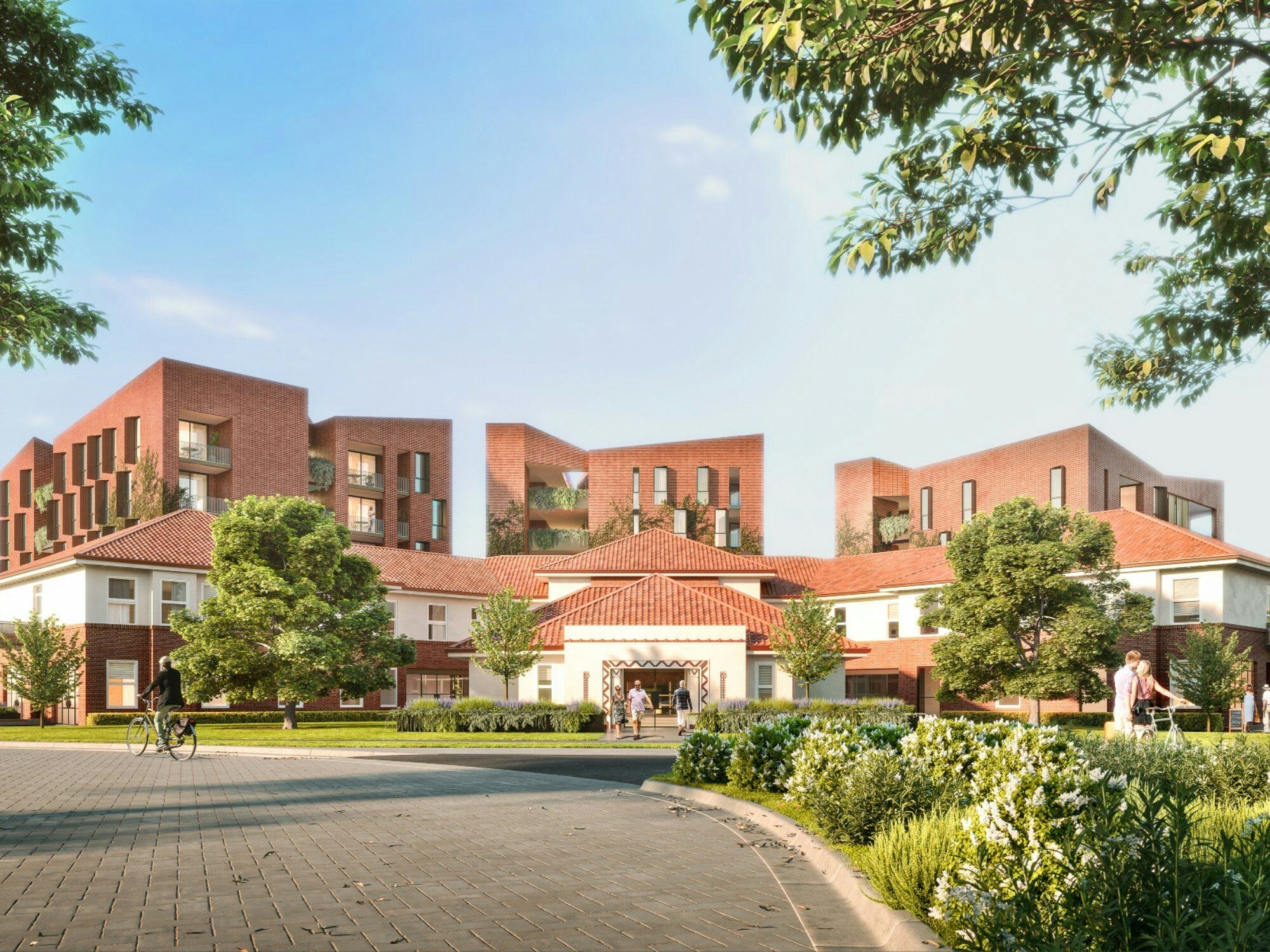
If Alberta were to rebuild the structural capacity required to support this population in a coherent and modern form, the capital cost would be substantial but not extraordinary relative to the scale of ongoing expenditure. A distributed campus model designed to serve approximately 6,000 high-acuity individuals across 10 regional sites would require approximately $3,600,000,000 in residential construction, assuming a per-bed cost of $600,000. Supporting infrastructure, including medical facilities, administrative space, and operational systems, would add approximately $1,080,000,000. Land acquisition and site servicing would require approximately $480,000,000, while equipment, furnishing, and clinical setup would add approximately $450,000,000. Workforce recruitment and training would require approximately $180,000,000, and system transition costs would add approximately $104,000,000. Applying a 15 percent contingency to account for megaproject realities adds approximately $884,100,000. The total capital cost therefore lands at approximately $6,778,100,000, with a reasonable variance range between $6,640,000,000 and $6,910,000,000.
THE TEN-YEAR VIEW
Over a ten-year horizon, this capital investment would be paired with operating costs of approximately $13,000,000,000, bringing the total system cost to approximately $19,780,000,000. That figure appears large in isolation, but it must be understood in context. Alberta is already on track to spend nearly that amount maintaining the current system over the same period. The difference is not the scale of spending. The difference is whether that spending produces a system that is structurally coherent or structurally diffuse.
THE ECONOMIC RETURN SIDE OF THE LEDGER
The economic side of the ledger reinforces this conclusion. Public spending at this scale generates significant return through wages, taxation, and local consumption. A concentrated system like Michener historically produced a strong and efficient multiplier effect, with estimates in the range of 1.4 to 1.8, meaning that every $100,000,000 in spending could generate between $140,000,000 and $180,000,000 in total economic activity. The current distributed system likely produces a broader but less efficient multiplier, estimated between 1.2 and 1.5 after accounting for administrative fragmentation and duplication. On a $1,300,000,000 annual base, that implies total economic activity between approximately $1,560,000,000 and $1,950,000,000. The money still circulates, but it does so less efficiently, with more friction and less structural clarity.
THE HIDDEN LABOUR OF FAMILIES
The presence of approximately $273,000,000 in Family Managed Services further complicates the economic picture. This portion of the system shifts administrative and operational labour into households, reducing formal wage reporting and weakening the measurable tax base. The work still exists, and the cost is still real, but it is partially removed from the formal economic cycle. This creates the appearance of efficiency while actually redistributing labour into less visible and less compensated forms.
TWO SYSTEMS, ONE FISCAL REALITY
The final comparison is not between past and present ideology. It is between two different ways of organizing the same fiscal reality. Michener concentrated cost, labour, and accountability into a single visible structure. The modern system distributes those same elements across a wide network that is harder to see and harder to govern as a whole. Rebuilding a structured, regionalized system would not introduce a new cost burden. It would reorganize an existing one. It would convert a diffuse $1,300,000,000 annual expenditure into a system with defined infrastructure, measurable outcomes, and centralized accountability points, while still maintaining community integration where appropriate.
THE DECISION ALBERTA CANNOT AVOID
The question Alberta now faces is not whether it can afford to rebuild structure. It is whether it can afford not to. A system that costs approximately $1,300,000,000 annually but cannot be easily visualized, measured, or held accountable carries its own form of risk. The closure of Michener removed a visible institution. It did not remove the need for institutional-level care. That need still exists, funded at scale, operating across a fragmented landscape that functions but does not cohere.
THE FUTURE MODEL
A modern system must reconcile two truths that Alberta has kept separate for too long. High-acuity care requires structure, and dignity requires integration. The future does not lie in choosing one over the other. It lies in building a system that does both deliberately, transparently, and at a scale that matches the reality already embedded in the province’s finances.
CITATIONABLE SOURCES: -
https://open.alberta.ca/dataset/3393a7b5-07bf-4b9f-8aaf-a6d89273297b/resource/58a8d024-398f-482e-b1c2-81a754a97253/download/budget-2026-fiscal-plan-2026-29.pdf
https://www.policyschool.ca/wp-content/uploads/2019/07/History-of-Disability-Sonpal-Valias.pdf
https://www.oag.ab.ca/reports/human-services-pdd-service-provider-monitoring-follow-february-2014/
https://inclusionalberta.org/fms-online-guide/fms-faq/