
THE DISABILITY EQUILIBRIUM
How Canada Built a Disability Insurance System It No Longer Fully Trusts


THE AUDIT THAT EXPOSED THE CRACKS
The most important thing buried inside the 1996 Auditor General report on the administration of the Canada Pension Plan Disability program is not the money. It is not the exploding caseloads. It is not even the inconsistent adjudication. The real revelation is the moment you realize the federal government had accidentally created something much larger than a disability benefit system and no longer fully understood the machine it had built. This was not merely a bureaucratic review warning about paperwork delays or sloppy oversight. It was a structural warning that Canada’s disability architecture had expanded faster than the federal government’s administrative capacity, actuarial modeling, quality controls, and institutional philosophy could handle. The Auditor General was effectively describing a national disability system drifting into disequilibrium in real time, and thirty years later we are still living inside the consequences.
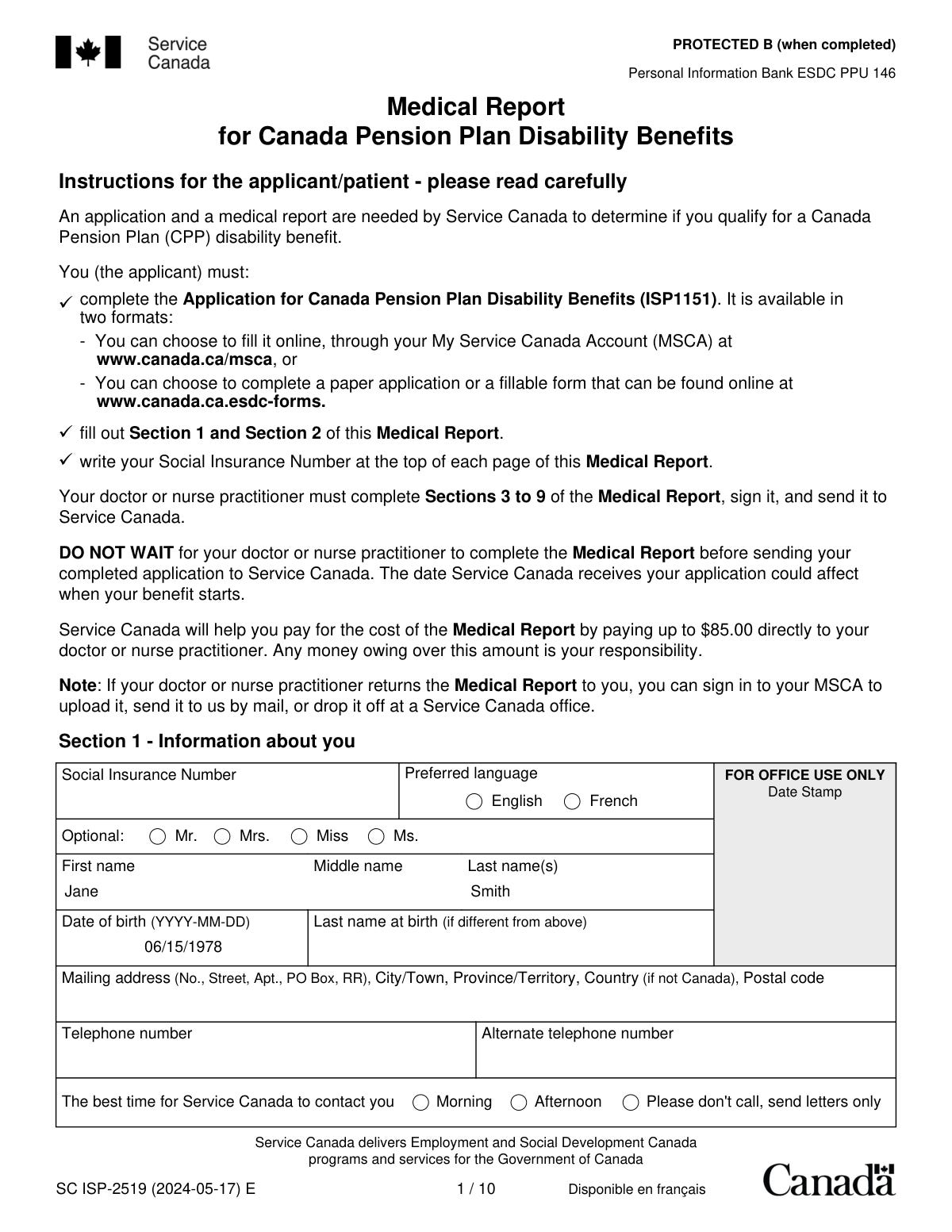
The numbers alone were staggering. CPP Disability payments exploded from roughly $841 million in 1986–87 to nearly $3 billion by 1995–96 while beneficiary counts almost doubled from 155,000 to 300,000. Governments do not watch that kind of growth without becoming nervous because insurance systems are built around predictability. They rely on actuarial assumptions, demographic forecasts, contribution rates, termination expectations, and long-range liability projections. Once growth starts outrunning the mathematical assumptions underpinning the system, institutional anxiety sets in quickly. But what makes this audit historically fascinating is that the Auditor General repeatedly admits the federal government did not actually understand why the growth was happening. That is the terrifying part. The report describes inadequate data systems, weak tracking tools, poor actuarial feedback mechanisms, inconsistent reassessment practices, and a lack of meaningful early-warning structures capable of identifying abnormal growth patterns before they became systemic. In other words, Ottawa was steering a rapidly expanding national disability insurance system while partially blindfolded.
WHEN DISABILITY STOPPED BEING PURELY MEDICAL
The report identified multiple drivers behind the explosion in claims. Economic recession pressures mattered. Labour-market instability mattered. Legislative changes mattered. But one of the most politically explosive findings involved the quiet expansion of eligibility standards through administrative interpretation rather than open democratic debate. Adjudicators were increasingly instructed to consider socio-economic realities like employability, regional unemployment conditions, and labour-market limitations when determining disability status, particularly for older workers over fifty-five. That may sound reasonable on the surface, but it represented a profound philosophical transformation inside the program itself. The system was no longer evaluating disability solely through a narrow medical lens. It was beginning to acknowledge something governments have always been deeply uncomfortable admitting publicly: in the real world, disability is inseparable from economics.
A fifty-eight-year-old labourer with chronic physical deterioration living in a collapsing regional economy may technically retain some residual work capacity, but if no realistic labour market exists for that capacity, is the person employable in any meaningful sense? That is the question quietly creeping into the system during the late 1980s and early 1990s. The Auditor General recognized immediately that this shift fundamentally altered the architecture of the program itself because once disability determination begins incorporating labour-market conditions and socio-economic realities, the system stops functioning as pure medical insurance and starts becoming something much broader: a hybrid labour-market stabilization mechanism.
That distinction matters enormously because medical disability can theoretically be actuarially modeled with relative clarity while socio-economic incapacity is infinitely messier. Now layer recession pressures on top of aging workers, industrial restructuring, declining manufacturing employment, regional economic collapse, and inadequate provincial supports. Suddenly the CPP Disability system stops functioning merely as disability insurance and starts acting as a pressure-release valve for structural economic instability itself. That is why the caseload explosion terrified administrators. The federal government slowly realized it was no longer merely adjudicating disability. It was partially absorbing the social consequences of labour-market transformation.
THE SYSTEM NO LONGER KNEW WHAT IT WAS
The 1996 audit repeatedly criticized inconsistency in adjudication. Different adjudicators reviewing the same evidence often reached dramatically different conclusions. Applications were sometimes approved based heavily on claimant-provided medical information with limited independent verification. Some adjudicators emphasized employability while others emphasized medical impairment. Some weighed socio-economic context heavily while others interpreted eligibility more narrowly.
That inconsistency was not merely administrative sloppiness. It was evidence of a deeper philosophical fracture inside the system itself because nobody had fully resolved what CPP Disability was supposed to be anymore. Was it narrowly medical insurance? Was it labour-force protection? Was it anti-poverty stabilization? Was it social insurance against catastrophic earning loss? Was it economic transition support for aging workers displaced from collapsing industries? The answer slowly became all of the above, and systems become unstable when their purpose expands faster than their administrative design.
Importantly, the Auditor General did not frame disabled people as broadly fraudulent or morally suspect. In fact, the report repeatedly acknowledges that disability determination is inherently subjective, emotionally difficult, and impossible to reduce into perfect certainty. The audit explicitly recognizes that improper denial of benefits can be devastating. That nuance matters because modern political rhetoric often oversimplifies disability debates into accusations of abuse versus demands for compassion. The audit does neither. Instead, it identifies a much more uncomfortable truth: the federal government created a rapidly expanding disability regime without building the administrative precision, reassessment systems, actuarial infrastructure, and quality-control mechanisms necessary to manage it consistently or sustainably.
WHEN GOVERNMENTS LOSE CLARITY, THEY COMPENSATE WITH CONTROL
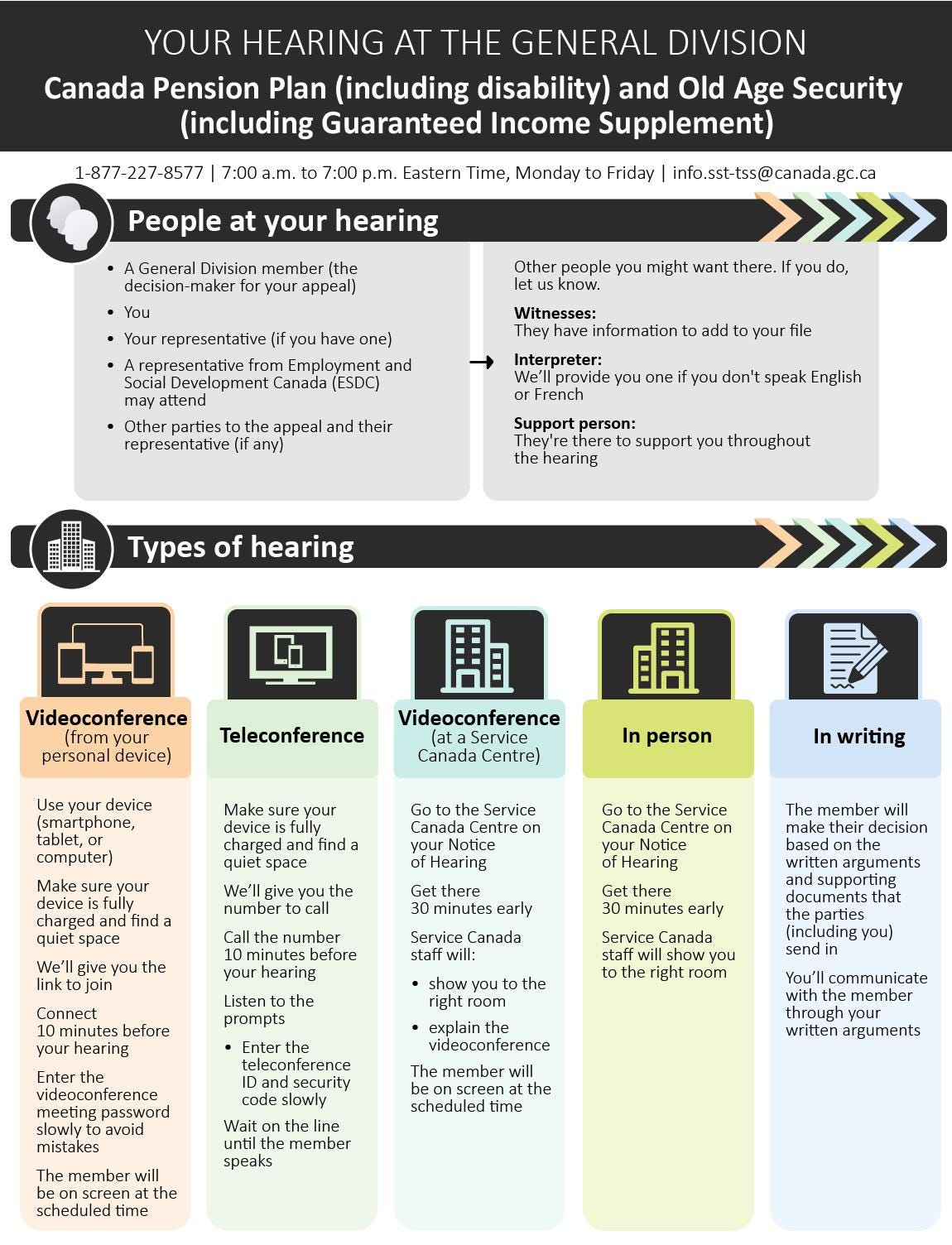
Once governments perceive insurance instability, systems naturally harden. More scrutiny emerges. Documentation requirements expand. Reassessments intensify. Quality-control frameworks appear. Procedural barriers multiply. Administrators become increasingly concerned about long-term liabilities and political sustainability. That is precisely the trajectory Canada entered over the following decades.
By the time the next major federal audit arrived in 2015, the crisis had transformed shape entirely. The problem was no longer uncontrolled expansion alone. The problem had become administrative warfare. The Auditor General found enormous appeal backlogs, procedural delays, inconsistent adjudication, and astonishing overturn rates. Thirty-five percent of reconsiderations reversed initial denials while sixty-seven percent of appeals were ultimately overturned either by the Tribunal or by the Department itself before hearing. Those numbers are politically devastating because they suggest the system had drifted from measuring disability cleanly toward measuring endurance inside bureaucracy.
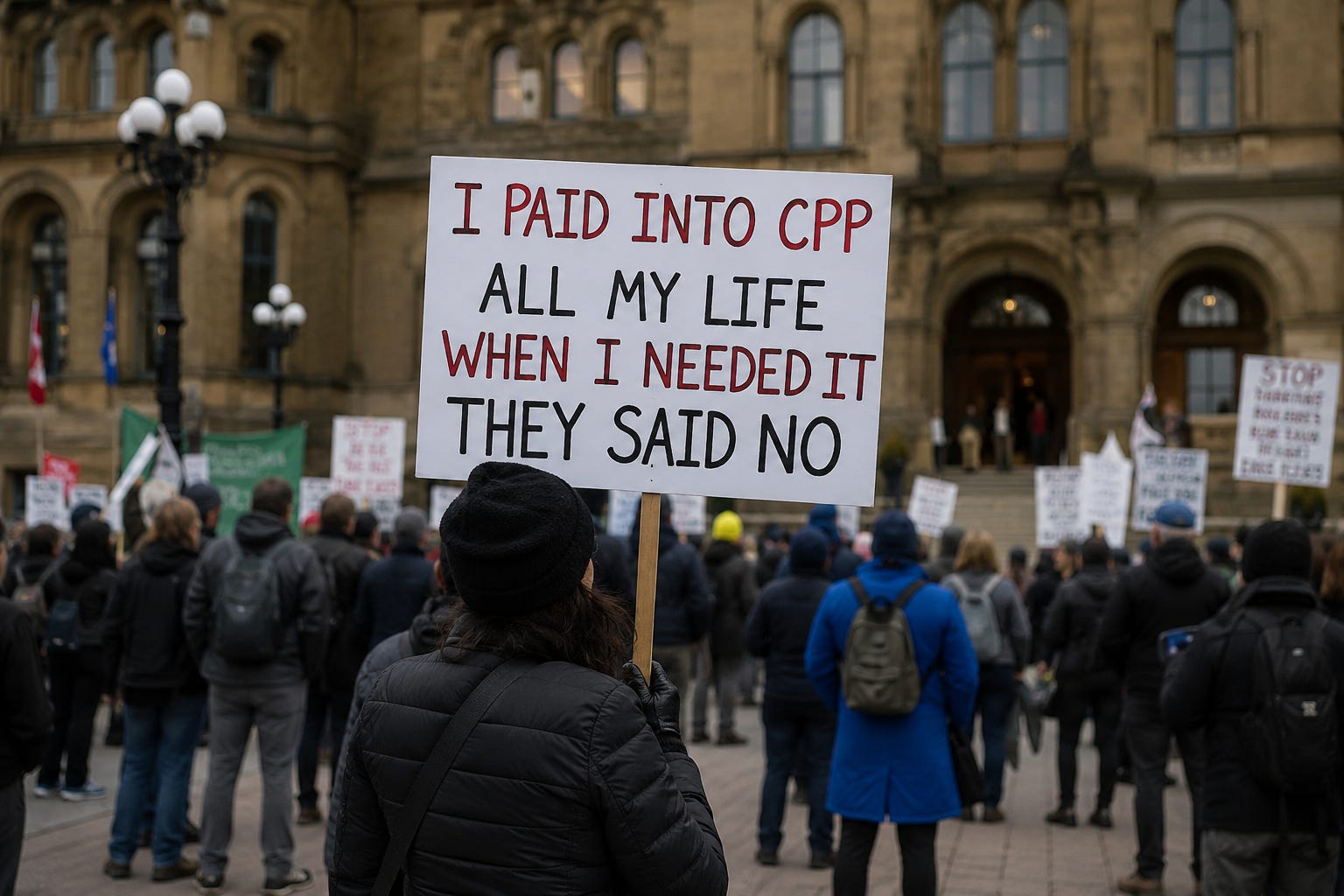
That is where the emotional core of the entire CPP Disability debate lives. Contributors do not experience CPP Disability psychologically as ordinary welfare. They experience it as insurance. Workers spent decades contributing through mandatory payroll deductions under the belief that if catastrophic loss of earning capacity occurred, the system would protect them. So when severe illness, chronic pain, neurological decline, or mental collapse destroys a person’s ability to sustain employment, the claimant does not feel like someone asking for charity. They feel like someone invoking an earned contractual obligation.
That is why denial battles become so emotionally explosive. A denied welfare application may feel painful. A denied insurance claim feels like betrayal.
THE HUMAN BODY DOES NOT FIT BUREAUCRATIC CATEGORIES
Governments have never fully reconciled the psychological reality surrounding disability insurance because from the institutional perspective, CPP Disability is still a finite actuarial structure vulnerable to runaway liabilities if standards become unstable. Administrators are not merely distributing compassion. They are managing future obligations stretching potentially decades into the future. So the system becomes trapped between two legitimate fears. Claimants fear abandonment by a system they funded while administrators fear destabilization of the insurance structure itself.
That tension is permanent because disability itself resists the binary categories bureaucracies require. Human functional capacity fluctuates. Mental illness fluctuates. Chronic pain fluctuates. Neurological disease fluctuates. People may possess partial work capacity while remaining fundamentally unemployable in real labour-market conditions. But insurance systems require thresholds and categories in order to function, so the bureaucracy asks a brutally simplistic question: can this person regularly pursue substantially gainful employment?
Meanwhile the human body answers: sometimes.
That mismatch is the deepest unresolved crisis inside modern disability governance.
THE EQUILIBRIUM CANADA STILL HAS NOT FOUND
The equilibrium point does not exist at maximum generosity or maximum restriction. It exists where legitimacy and sustainability remain simultaneously credible. Contributors must believe the system will genuinely protect them during catastrophe. Administrators must believe the program remains actuarially viable over generations. Adjudication must become consistent enough that appeals are exceptional rather than structural. And the system must stop forcing human beings into artificial absolutes where survival requires proving total incapacity while any attempt at partial labour participation creates existential risk.
Because the real danger exposed by the 1996 audit was never simply fiscal expansion. It was what happens when governments accidentally build a disability system large enough to absorb the failures of the labour market, the healthcare system, industrial restructuring, aging demographics, and regional economic collapse simultaneously while still pretending it is merely a narrow medical insurance program.
That contradiction still defines the CPP Disability system today, and until Canada honestly confronts what the program actually became, the war between contributors and adjudicators will continue because both sides are fighting over a truth the system itself has never fully admitted.
The latest major federal Auditor General audit focused specifically on CPP Disability was the Fall 2015 report “Canada Pension Plan Disability Program.”
I have been fighting this battle for near a decade without answers. I am starting to believe CPP is only a pension when contributions are to be paid- after that, it become a vehicle for wealth transfer to the private sector.
I had no idea this even existed!!!! I became permanently disabled after a fall at work. Not one anything, lawyer, WSBC, no one, mentioned to me that I may qualify for this program. I am going to give them a call and see if they do retro payments.